


Key Takeaways
- Morning blur often clears after a few blinks and often comes from tears drying out overnight.
- Sleep habits, allergies, and dry air can also leave your eyes cloudy at sunrise.
- Blur that lasts all day may point to a prescription change or an eye condition.
- Simple steps like lubricating drops and a humidifier can help most mornings.
- An optometrist in Vancouver, WA, can check for dry eye and other potential causes.
You open your eyes, reach for your phone, and the screen looks like a smudged window. For most people, that haze fades after a few blinks as fresh tears spread across the surface of the eye.
Blurry vision in the morning usually comes from your eyes drying out overnight, and it typically clears within seconds once you blink and moisten them again.
Temporary blur that clears quickly is common and rarely a worry. When the blur hangs around for hours or shows up with pain, redness, or sudden changes, it is a good idea to come in for an eye exam to rule out anything more serious at play.
Everyday Causes of Blurry Vision in the Morning
Dry Eyes and Lost Tears Overnight
While you sleep, your eyes stop making the steady stream of tears they produce during the day. By morning, the surface can feel gritty and look cloudy.
Some people sleep with their eyes slightly open, which dries the surface even faster. A ceiling fan, forced-air heat, or an air conditioner blowing across your face can pull moisture away all night long.
Sleep Habits That Can Blur Your View
How you treat your eyes before bed can dramatically impact how they feel the next morning. Face-down sleeping, for instance, presses your eyes firmly into the pillow, often leaving them puffy and blurred upon waking.
However, sleeping in contact lenses poses a much more serious risk. Leaving lenses in overnight drastically restricts the flow of oxygen to the cornea and traps debris against the eye surface, creating an ideal environment for harmful bacteria. This significantly increases your vulnerability to severe corneal infections, inflammation, and ulcers.
Alongside lens habits, everyday factors like a late glass of wine or general fatigue can leave your eyes feeling dry and strained when daylight breaks.
Allergies and Irritants in Your Bedroom
Your bedroom holds tiny irritants that settle on your eyes while you rest. Dust mites in the mattress, pet dander on the blanket, and pollen tracked in from outside can all lead to a reaction. Watch for these signs:
- Redness around the eyes
- Scratchiness that makes you want to rub
- Watery or crusty eyes in the morning
Refractive Errors and Prescription Changes
Sometimes, morning or daytime blur is simply your vision asking for a sharper correction. Unaddressed nearsightedness, farsightedness, or astigmatism can make the world feel foggy well before your day gets started. If your current glasses or contacts no longer bring your surroundings into crisp focus, it is likely time for a prescription update.
Underlying Conditions That Can Cause Morning and Daytime Blur
Persistent blurriness upon waking or throughout the day can also point to specific medical conditions impacting your eye health. Several issues frequently manifest as morning fogginess or fluctuating clarity, including:
- Dry eye syndrome: Disrupts the tear film overnight, causing surface irritation and blurred vision upon waking that often improves temporarily with blinking.
- Corneal swelling and Fuchs’ dystrophy: Causes fluid to build up in the cornea while your eyes are closed overnight, resulting in significant morning blur that gradually clears as the day goes on.
- Cataracts and glaucoma: Progressively alter light transmission and internal eye pressure, leading to persistent haziness.
- Keratoconus: Progressively thins and distorts the cornea, causing continuous visual distortion.
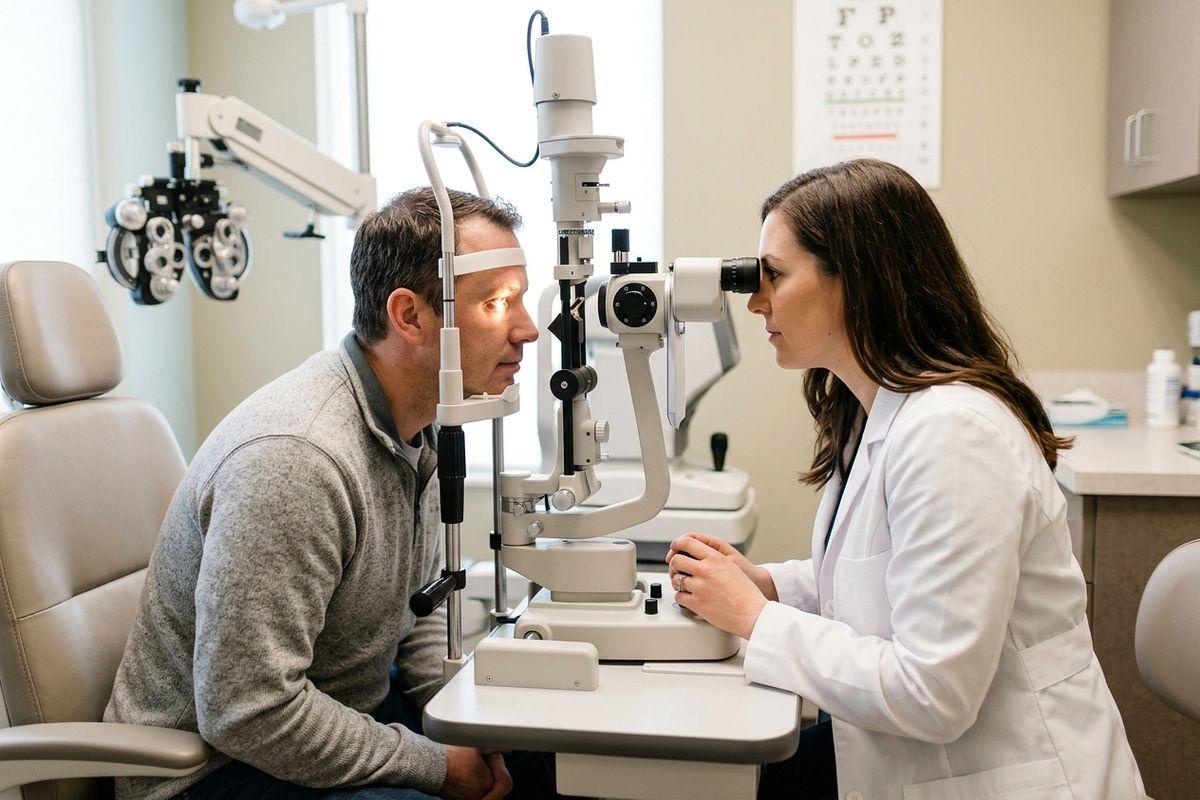
Because many of these conditions respond exceptionally well to early intervention, tracking a daily pattern of blur is well worth mentioning during your next comprehensive eye exam.
Whole-Body Links
Your eyes often reflect what is happening throughout your entire body, and systemic health factors frequently manifest as sudden changes in vision. For instance, fluctuations in blood sugar can pull fluid into and out of the eye’s lens, leaving your vision hazy and unstable upon waking.
Sleep apnea, which repeatedly interrupts breathing during the night, can also compromise long-term eye health by altering oxygen delivery and increasing the risk of certain ocular conditions. When persistent morning blur pairs with unusual fatigue, thirst, or other whole-body symptoms, the root cause often reaches far beyond the eyes.
Simple Ways to Help Clear Up Your Mornings
Small changes at night can make a real difference by sunrise. Try these steps:
- Use lubricating drops before bed to keep the surface moist overnight.
- Run a humidifier in your room and drink enough water during the day.
- Wash your bedding often and point that fan away from your face.
Habits That Can Help Tired Eyes
Your daytime routine sets up how your eyes feel the next morning. Give them regular breaks and steady rest.
- Follow the 20-20-20 rule, where every 20 minutes of screen time you look 20 feet away for 20 seconds.
- Put screens down at least an hour before bed.
- Aim for 7 to 8 hours of sleep each night.
When to See an Optometrist
Most morning blur clears on its own, but some signs deserve a closer look. Reach out if you notice any of these:
- Blur that lasts the whole day and does not clear up
- Eye pain or a sudden change in how you see
- New floaters, flashes of light, or a shadow across your vision
How Our Team Can Help
A comprehensive eye exam can pinpoint whether dry air, a prescription change, or a health condition sits behind your foggy mornings. Our team looks at the full picture of your eye health, not just one test.
For eyes that feel dry and cloudy day after day, our dry eye center offers focused therapy and treatment built around what your eyes actually need.
Clearer mornings can start with one appointment. Reach out to Precision Eye Care in Vancouver, WA, today to schedule your eye exam and get personal answers for your eyes.