


Key Takeaways
- Floaters are tiny clumps in the eye’s gel that cast shadows on your retina.
- Most floaters come with age and are typically harmless over time.
- A sudden burst of floaters, flashes of light, or a shadow across your vision calls for a prompt eye exam.
- A dilated eye exam and imaging help our team look closely at your retina.
- Mild cases often need only monitoring, while some floaters may need further care.
It starts with a tiny speck drifting across your field of view. You blink, hoping it will clear, but it simply floats along with your gaze.
Those little spots are known as floaters, and they are one of the most common things we discuss here at Precision Eye Care.
Floaters happen when the clear gel inside your eye, called the vitreous, begins to naturally thicken or shrink with age. As this gel changes, it casts small shadows onto your retina, creating the shapes you see drifting by. While the vast majority of floaters are harmless, a sudden burst of new spots or flashes of light is always a sign that it is time to schedule an eye exam.
Common Reasons Behind Floaters
While age is the most frequent trigger, several other factors can lead to floaters. Nearsightedness, previous eye injuries, or past surgeries can make them more likely to appear. Inflammation or systemic health shifts tied to diabetes may also play a role, making professional evaluation essential.
Though floaters are more commonly noticed after age 50, individuals with high nearsightedness (or myopia) often experience them earlier in life.
What Floaters Look Like
Floaters don’t look the same for everyone. You might spot one shape one day and something different the next. They tend to drift when your eyes move and settle when you hold still. You may notice:
- Dark dots or small specks
- Thread-like strands or cobwebs
- See-through rings or soft blobs
Signs You Need an Eye Exam
A few floaters that have drifted around for years usually aren’t a worry. A quick change, though, is worth attention. Book an appointment right away if you notice:
- A sudden jump in how many floaters you see
- Bright flashes of light, like camera flashes at the edge of your vision
- A shadow or curtain moving across part of your view
How to Tell If Floaters Are Serious
New, sudden, or fast-growing floaters deserve a same-week check. So does side vision that seems to fade or dim. These shifts can point to changes at the back of your eye, like a detached retina, that your eye doctor can catch early.
How We Check Your Floaters
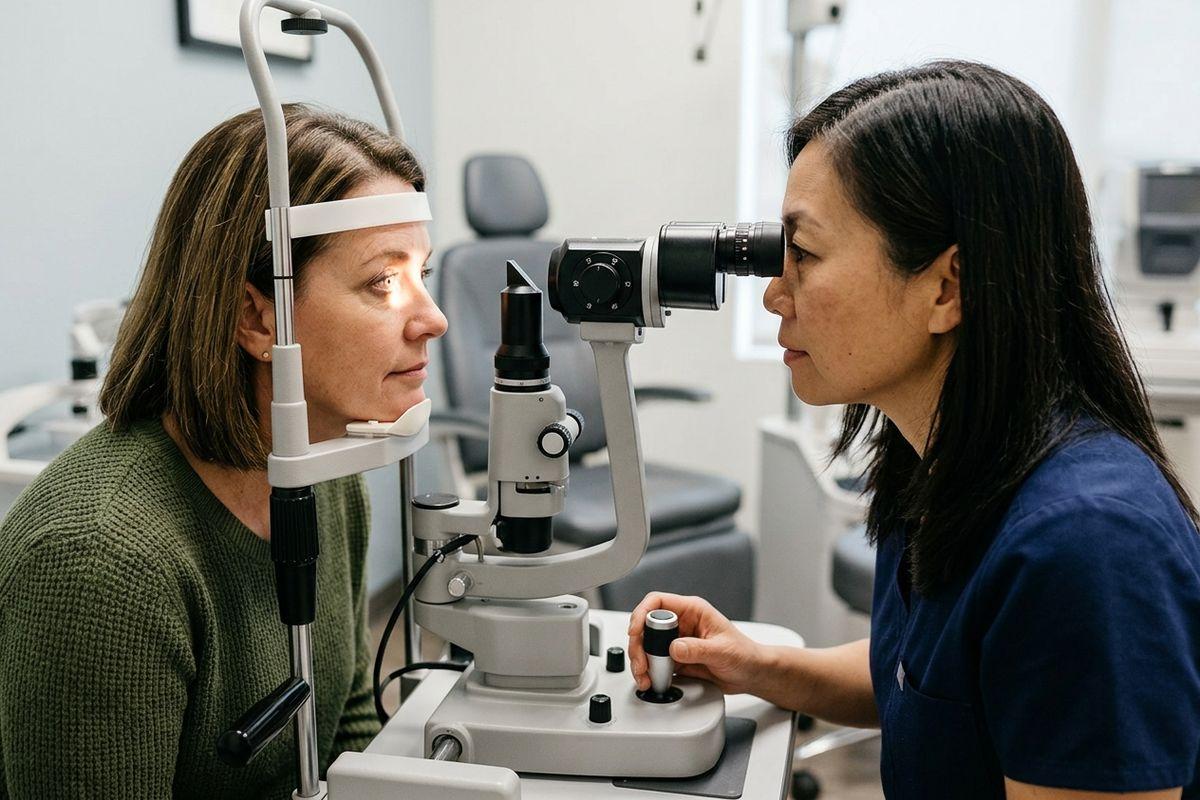
When you come in, our team takes time to look at the whole picture. A dilated exam opens your pupils wide so your eye doctor can study your retina and the gel inside your eye.
A slit-lamp gives a magnified view, and a pressure check adds more detail. Side vision testing rounds things out during a comprehensive eye exam, so nothing gets missed.
Floater Treatment and Next Steps
For mild cases, watchful monitoring is often enough. Many floaters fade into the background of your vision over weeks or months as your brain learns to tune them out.
When floaters crowd your view or point to a bigger change, your eye doctor can talk through options, including care for changes at the back of your eye in severe cases. Every plan fits your eyes and your daily needs.
When to Book Your Eye Exam
New symptoms mean it’s time to call soon. Flashes, a rush of floaters, or a shadow across your view all deserve prompt scheduling. Routine visits matter too, since they help catch quiet changes before you notice them.
Ready to get answers about your floaters? Reach out to Precision Eye Care in Vancouver, WA, to book your eye exam with our friendly team that takes the time to explain what your eyes need.